
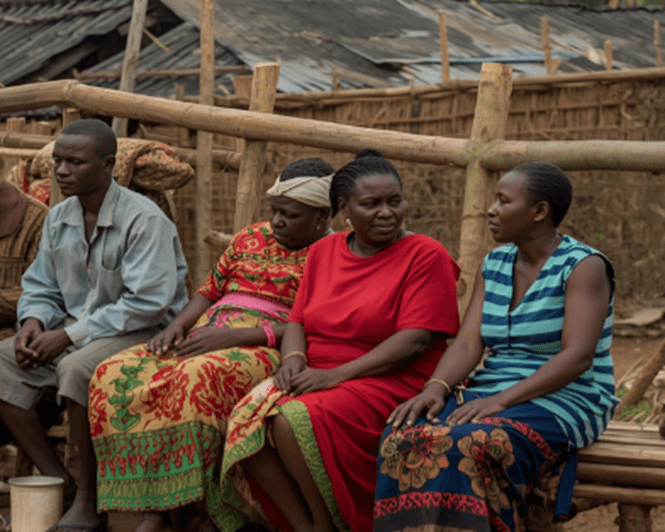
When people talk about stress and trauma, they often imagine city life. They imagine rent, noise, high-pressure jobs, traffic, deadlines, fast paced life etc.
But the truth is this:
Some of the deepest pain, the strongest pressure, and the hardest emotional battles are happening quietly in rural villages.
Behind the calm landscapes, green farms and close-knit communities, rural families carry heavy burdens in silence.
They may not use terms like mental health, trauma, or resilience, but they feel them every day.
This is what rural families are really going through.
- The Hidden Stress of Survival
For many rural households, life is a daily struggle.
Families deal with:
- Unpredictable harvests
- Rising food prices
- Lack of steady income
- Long walks for water
- School fees pressure
- Illness without nearby hospitals
This constant uncertainty creates a type of stress that is chronic and exhausting. It is not the loud and dramatic kind, it is the quiet, heavy stress that sits in the heart day after day.
Many parents go to bed thinking:
“How will I take care of my family tomorrow?”
2. Trauma from Loss, Poverty, and Hard Life Events
Rural families face different forms of trauma, such as:
- Losing loved ones unexpectedly
- Domestic violence
- Alcoholism in households
- Severe poverty
- Neglect or abandonment
- Parenting stress for single mothers
- Watching children suffer due to lack of resources
Unlike urban settings where counselling is more available, rural communities have fewer places to turn for help.
Many people carry untreated trauma for years, believing they must be “strong” even when they are broken inside.
3. The Silent Burden on Women and Girls
Women in rural areas often carry:
- Emotional labor
- Childcare
- Household responsibilities
- Farming
- Financial pressure
- Gender-based violence
- Cultural expectations
Girls face early pregnancies, limited opportunities and heavy chores that leave little time for themselves.
The emotional load they carry is huge, yet mostly unspoken.
4. The Pressure on Men to “Be Strong”
Men in rural communities are expected to:
- Provide financially
- Lead the family
- Fix every problem
- Hide emotions
- Never show weakness
When men lose jobs, face farming losses, or feel hopeless, they often suffer in silence.
- Some turn to alcohol.
- Others isolate.
- Some become aggressive.
Not because they are bad people, but because they have nowhere to take their pain.
5. Youth Carry Trauma Too
Rural youth are facing:
- Unemployment
- Depression
- Family pressure
- Relationship issues
- Hopelessness
- Addiction
- Poverty stress
Many dream big but feel trapped.
And because mental health is taboo, they rarely seek help.
Yet… Rural Communities Are Full of Resilience
Despite all these challenges, rural families possess incredible resilience.
They find strength in:
- Community support
- Faith and spirituality
- Shared struggles
- Hope for their children
- Farming and working together
- Storytelling and laughter
- Small acts of kindness
Resilience is woven into the culture:
“We don’t give up. We keep going.”
Even in the deepest pain, rural families show courage that is often unseen and uncelebrated.
What Communities Need to Heal
To support rural families, we must provide:
- Safe spaces for conversations
- Community-based mental health education
- Counselling and support groups
- Practical livelihood support
- Compassion instead of judgment
Healing requires both emotional support and community understanding.
Tenda Wema Community Organization Is Taking Action
As part of our commitment to building a healthier, more informed community, Tenda Wema CBO will be holding a Mental Health Awareness Walk in Shianda, Kakamega County, Kenya, on 20th December.
The walk aims to:
- Break the silence around stress and trauma
- Encourage open conversations
- Educate families on mental health
- Promote healing and resilience
- Reduce stigma and shame
This event is not just a walk, it’s a movement for hope, understanding, and community healing.
Rural Families Are Strong, But They Need Support Too
The stress rural families face is real.
Their trauma is real.
Their resilience is powerful, yet it should not be taken for granted.
This is why initiatives like the Mental Health Walk are so important. They remind communities that mental health matters, that no one is alone, and that healing begins when we walk together.
 Tenda Wema Community Organization
Leave a comment